

Ethique Plastic Surgery | Sydney and Southern Highlands
Blepharoplasty / Eyelid Surgery
For adults considering upper eyelid surgery for excess or drooping eyelid skin that may cause heaviness, a hooded appearance or interfere with vision. Dr André Safvat, Specialist Plastic Surgeon, provides personalised consultation and surgical care in Sydney and the Southern Highlands.
All surgical procedures carry risks. Individual suitability, outcomes and recovery vary.
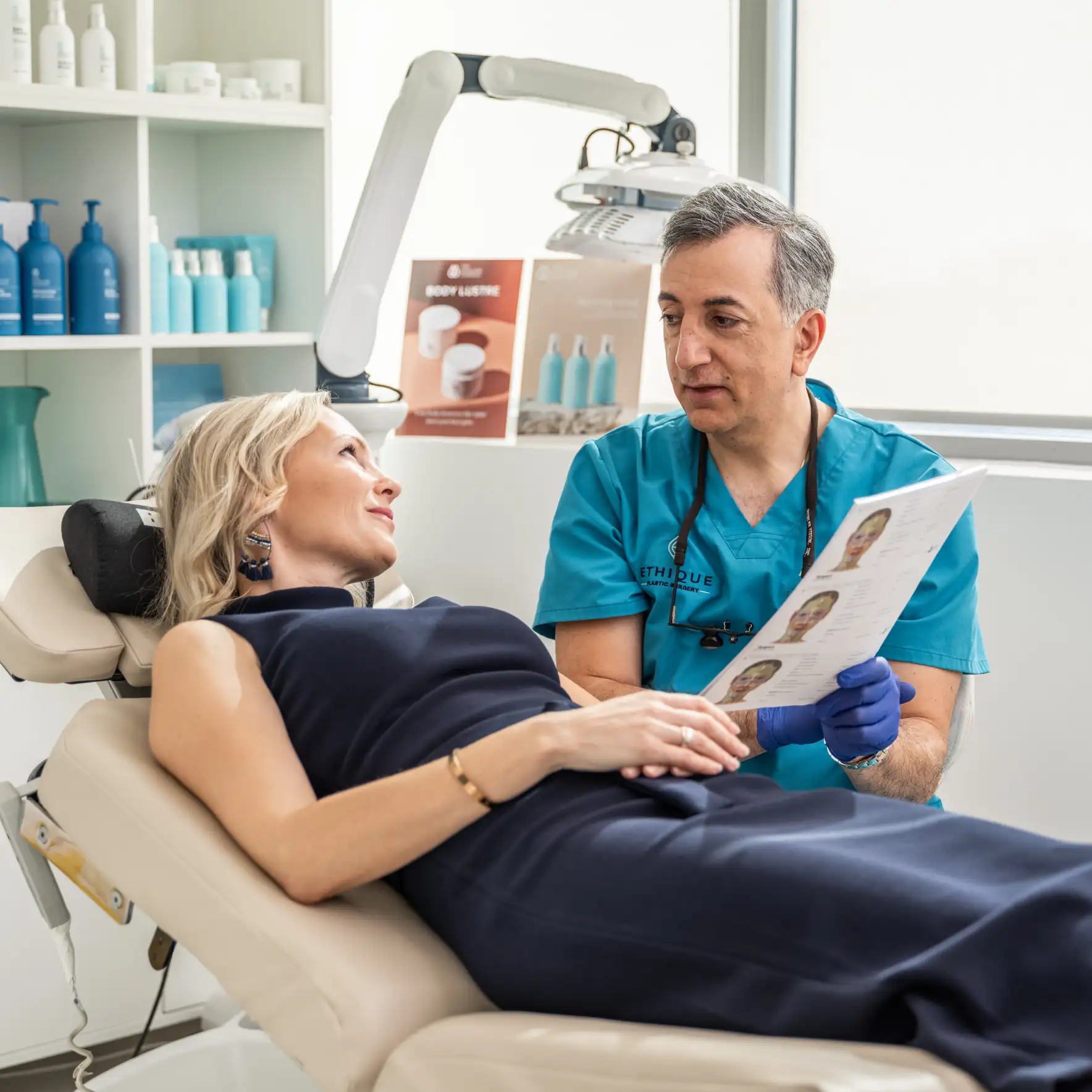
Specialist Plastic Surgeon
FRACS (Plast.)
Miranda, Bowral and Concord
Surgery in accredited private hospitals
Blepharoplasty Procedure Guide
More specific details will be provided during your consultation and based on your individual surgical plan.
Anaesthetic
Light general anaesthetic
Surgery
Approx 2 hours
Hospital stay
Day surgery
Est. time away from work
Approx 1-2 weeks
Is eyelid surgery right for you?
Upper blepharoplasty may be considered when excess or drooping upper eyelid skin causes physical symptoms, affects vision or is a concern due to changes around the eyes. Suitability depends on your health, eyelid anatomy, concerns and individual circumstances.

Heavy or hooded upper eyelids

Upper eyelid skin affecting vision

Age-related changes to the upper eyelids

Drooping or sagging upper eyelid skin

Changes to upper eyelid balance or symmetry
Brow position can also contribute to heaviness around the upper eyelids and should be assessed separately.
Blepharoplasty before and after gallery
View real patient examples from Dr Safvat’s blepharoplasty gallery. You must be over 18 to view before and after images.
What eyelid surgery involves
Upper blepharoplasty is an individualised operation. The extent of surgery depends on the amount of excess skin present, the underlying tissues and your eyelid anatomy.
Positioning the incision
The incision is placed within the natural fold of the upper eyelid.
Removing excess eyelid skin
Excess skin is carefully removed from the upper eyelid based on your anatomy and surgical plan.
Addressing underlying tissue
A small amount of muscle or fat may also be removed when required.


Receive pricing and recovery information
Our team can explain consultation options and provide further information before any decision about surgery is made.
Recovery overview for blepharoplasty
Recovery differs between patients and will depend on the extent of the procedure/s, health, work and lifestyle.
Day surgery
Upper blepharoplasty is usually performed as day surgery, without an overnight hospital stay required.
First two weeks
Swelling, bruising, dryness and soreness are common. Most patients need 1-2 weeks off work. Cold compress, eye drops and elevating your head for sleep can help recovery.
Weeks three to four
Heavy lifting and strenuous activity are restricted for around 3-4 weeks. Sunglasses use may be advised by your surgical team to protect your eyes from sunlight and wind.
Following months
Scars gradually settle and mature over time. Eyelid incisions may continue healing for 6-12 months.
Blepharoplasty involves permanent scars and carries surgical and anaesthetic risks. Your eye health, medical history, recovery requirements and expectations should all form part of the decision.
Upper blepharoplasty incisions are generally positioned within the natural fold of the eyelid. Scars are usually more noticeable during the earlier stages of healing and continue to mature over time. Scar appearance and healing vary between patients. Dr Safvat will discuss incision placement and post-operative scar care during your consultation.
All surgery carries risks. Potential complications of blepharoplasty can include infection, bleeding or haematoma, altered scarring, temporary blurred vision, dry or gritty eyes, eyelid asymmetry and changes in sensation. General anaesthetic also carries risks. Dr Safvat will discuss the risks relevant to your health and proposed procedure before you decide to proceed.
Excess upper eyelid skin can, in some patients, hang over the eye and affect vision. Removing this excess skin may improve vision when the eyelid skin is contributing to the obstruction. Your eyelids and symptoms will need to be assessed to determine if there is a functional reason for surgery.
Blepharoplasty is designed to address excess eyelid skin and underlying fat or muscle. It does not remove all wrinkles or dark circles around the eyes. Some fine lines may change after excess skin is removed, and under-eye bags can contribute to dark circles in some patients, but these concerns need to be assessed individually.
Changes from blepharoplasty should last for many years, but surgery does not stop the natural ageing process. Skin and tissues around the eyes will continue to change with time, and another surgery may be considered in the future.
Upper blepharoplasty may attract a Medicare item number when the procedure is required for functional reasons and the relevant clinical criteria are met. Dr Safvat will assess this during consultation. In some cases, visual field testing by an optometrist may also be required. If your procedure meets the relevant requirements, Medicare and private health insurance benefits may apply. Out-of-pocket costs can still apply and private health benefits depend on your individual policy and level of hospital cover. Blepharoplasty performed for cosmetic reasons is not covered by Medicare or private health insurance benefits. Lower blepharoplasty is considered a cosmetic procedure. The Ethique team can discuss estimated costs after your consultation and once your individual surgical requirements are known.
Still have questions?
Our team can explain more about the consultation process, estimated pricing and what to expect.
Dr André Safvat
Specialist Plastic Surgeon providing consultations and surgery across Miranda, Bowral and Concord.

DR ANDRE SAFVAT (MED1155201) Registered Medical Practitioner, Specialist Plastic Surgeon (specialist registration in Surgery – Plastic surgery).
FRACS (Plast.)
ASPS member
ASAPS member
Accredited private hospitals
Receive pricing and recovery information
Leave your details and the Ethique team will contact you with further information about consultations, approximate fees and recovery.
This request does not book surgery. Your details will be used only to respond to your enquiry in accordance with the practice privacy policy.